CareerOS is one place for the whole of it — writing a question paper, invigilating hundreds of students at once, marking the written answers with the reasoning shown, and tracking every candidate from applied to placed. Built for Indian colleges, institutes and NGOs.
A form for the test. A video call for the invigilation. A staff member marking two hundred written answers by hand over a weekend. A spreadsheet for who applied where, kept by one person, out of date by Wednesday. And at the end of it, a placement report that nobody can defend line by line because the evidence is in four places.
CareerOS is the one place all four of those live, and every number in it can be traced back to the paper somebody sat.
Each one works on its own. Together they mean a score has a paper behind it, a paper has evidence behind it, and an offer has both.
Write a paper from a topic, a job description or your own question bank — multiple choice, numeric, written answers and programming, in thirteen Indian languages.
Camera, identity check, full screen, tab and focus. Everything recorded as evidence with a time against it — and a person, never the software, decides what it meant.
Written answers and code marked against your rubric, with the reason written out. Substance in poor English scores. Anything the marker was unsure of goes to a human.
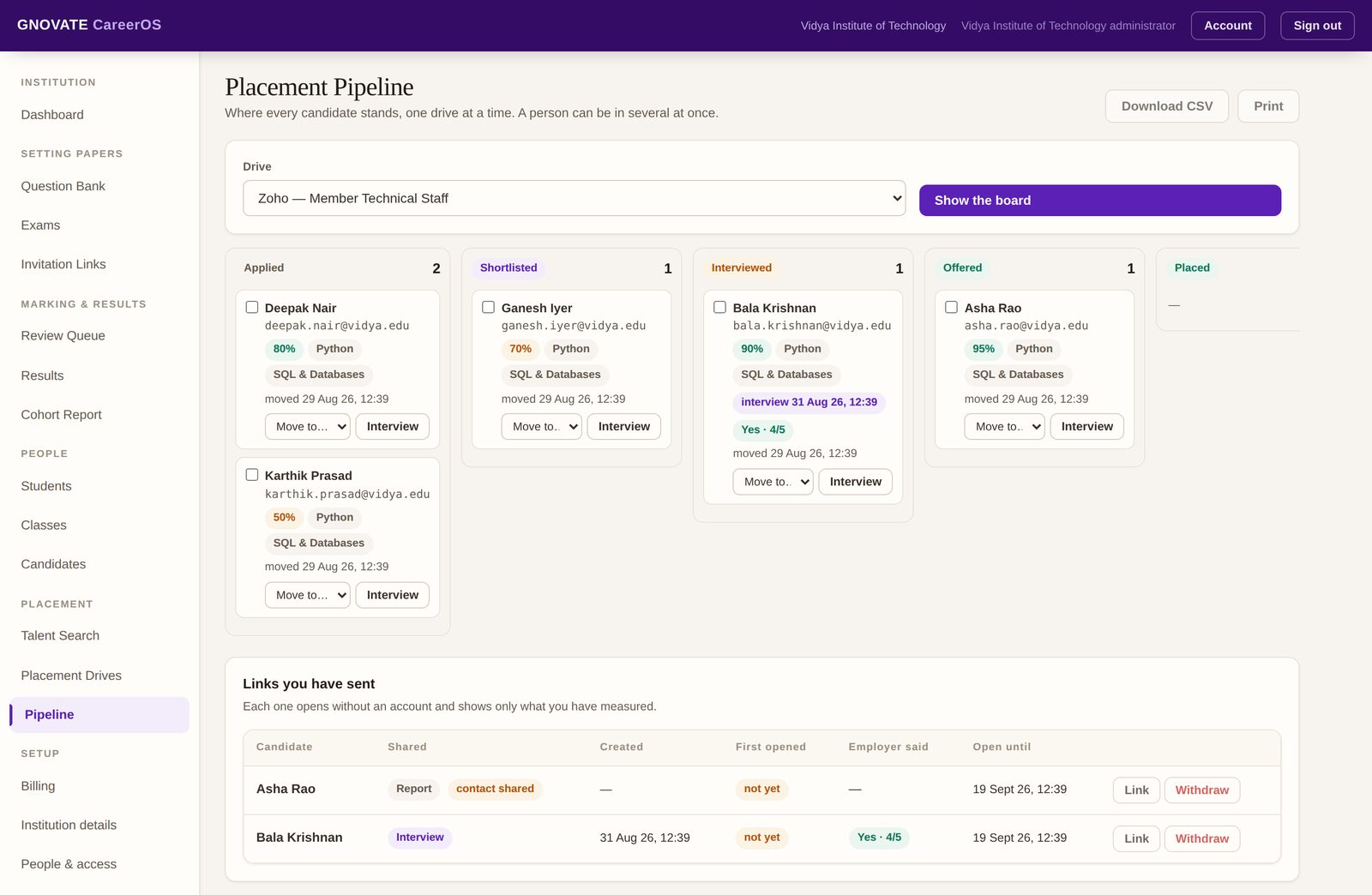
Every candidate on a board per drive — applied, shortlisted, interviewed, offered, placed — because the same person is at a different stage at three companies at once.
These are numbered because they genuinely happen in this order. Each one is a screen, not a promise.
Paste the company's job description. The skills it actually asks for come back, weighted, and a paper is built against them. Or open your own question bank and choose. Either way you see every question before anybody sits it.
Students sign in with the address their college registered. An invitation link brings in candidates from outside — a WhatsApp forward is a valid way to run a drive, and pretending otherwise does not make it stop happening.
Identity photo, camera checks through the paper, full-screen and focus watched. A student using a screen reader is not treated as a cheat, because their institution said so in advance.
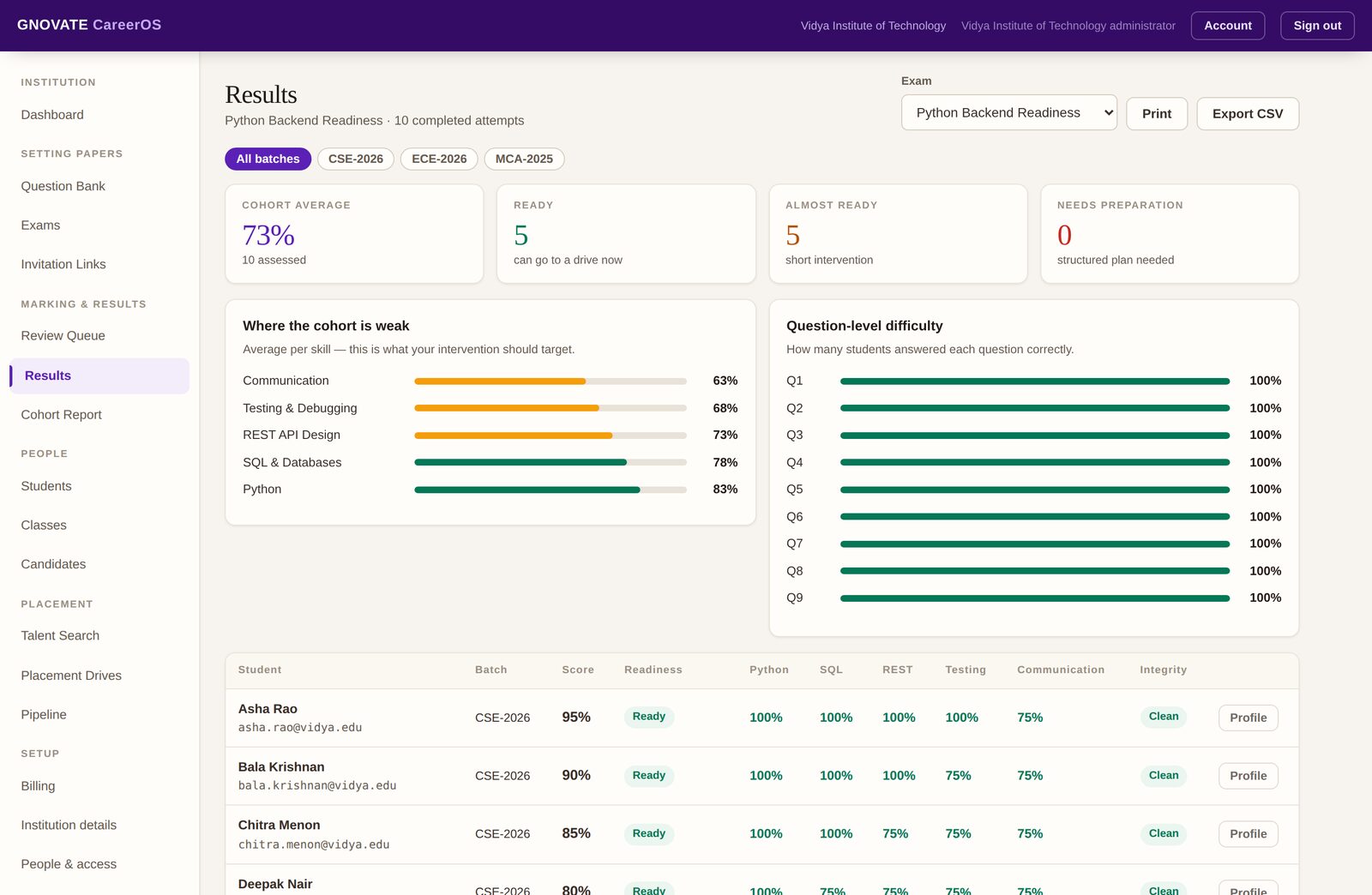
Multiple choice instantly. Written answers and code against the rubric with the reasoning attached. Anything flagged, auto-submitted or marked with low confidence lands in a review queue for a person to settle.
Who registered, who turned up, the turnout, who finished. Readiness per skill rather than one averaged number, because a candidate who sat Python, Testing and Communication is not one number.
The ones worth taking forward move onto the drive's board. Every move is dated and stays on the record, so at the end of the season the placement report writes itself from what happened.
Every signal is recorded with a time against it and shown to a human being. Nobody is failed by a piece of software, and no result is quietly adjusted — which is the only version of this a college can defend to a parent.

Left full screen at 14:22. Twice, for nine seconds and four. Shown to the invigilator with the timings.
A second face at 14:31. Held as evidence. A brother walking behind a chair and somebody reading answers look the same to a camera — a person tells them apart.
An automatic fail. The software has no opinion on whether somebody cheated. It says what it saw and who was watching.
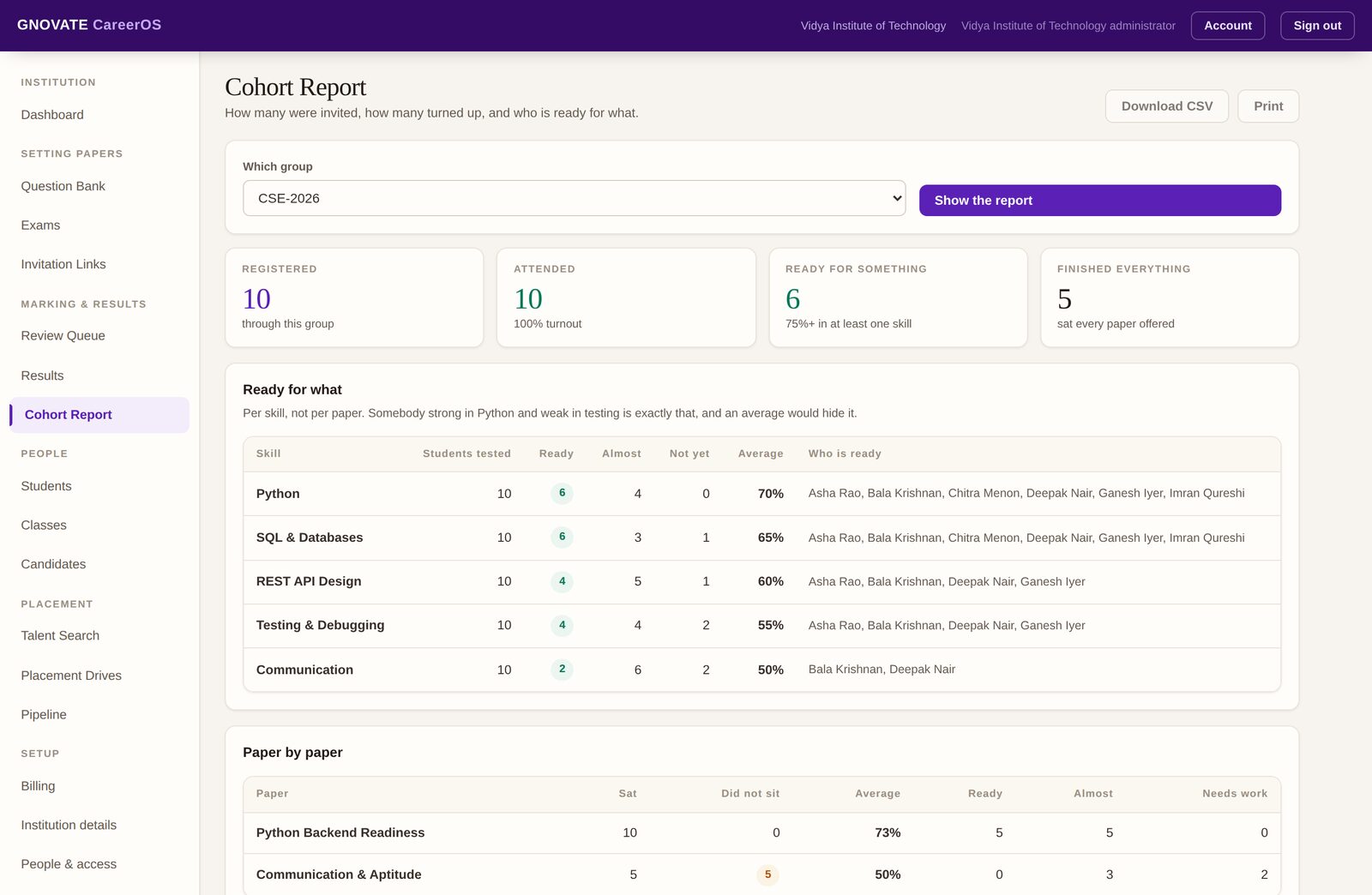
Every written mark carries its reason and who made it. Change one and the attempt regrades in front of you. A cohort is reported skill by skill, not as one average that hides which half of the class cannot write SQL.
On the same Tuesday somebody is shortlisted at one company, interviewed at a second and already declined by a third. A single "status" column is how a college schedules an interview for a candidate who signed elsewhere on Monday. So the board is per drive, and every card says where else that person stands.

Placement cells running screening drives for twenty companies a season, with a training calendar underneath it.
Batches in and out every six weeks, where the proof that the course worked is the thing you sell.
Cohorts that have to be reported on to a funder, per skill, with evidence that stands up.
Honest online examinations without buying a hall's worth of hardware, in the language the class is taught in.
Every package includes the whole product — examinations, invigilation, marking and placement. What changes is how many people it covers and how much AI work is included each month.
A demonstration account runs for two weeks with twenty-five students, and stops by itself — no card, nothing to cancel. Unused monthly allowance carries into the next month.
Tell us roughly what you run and we will open a demonstration account with your own name on it. Half an hour on a call, and you keep the account for two weeks.
We reply within one working day, from a person.